Supply Chain Compliance Audits: Uncovering Hidden Risks Before They Become Critical
A few days ago, a client approached me and said, “Our sales are steady, payments are coming in, and vendors are delivering on time, yet our profits keep declining and we don’t understand why.”
I explained that modern supply chains have become highly complex. They operate within multi-layered ecosystems influenced by global sourcing, fluctuating demand, and increasing cost pressures. As a business expands, hidden inefficiencies can gradually appear, leading to reduced profitability and disruptions in service levels.
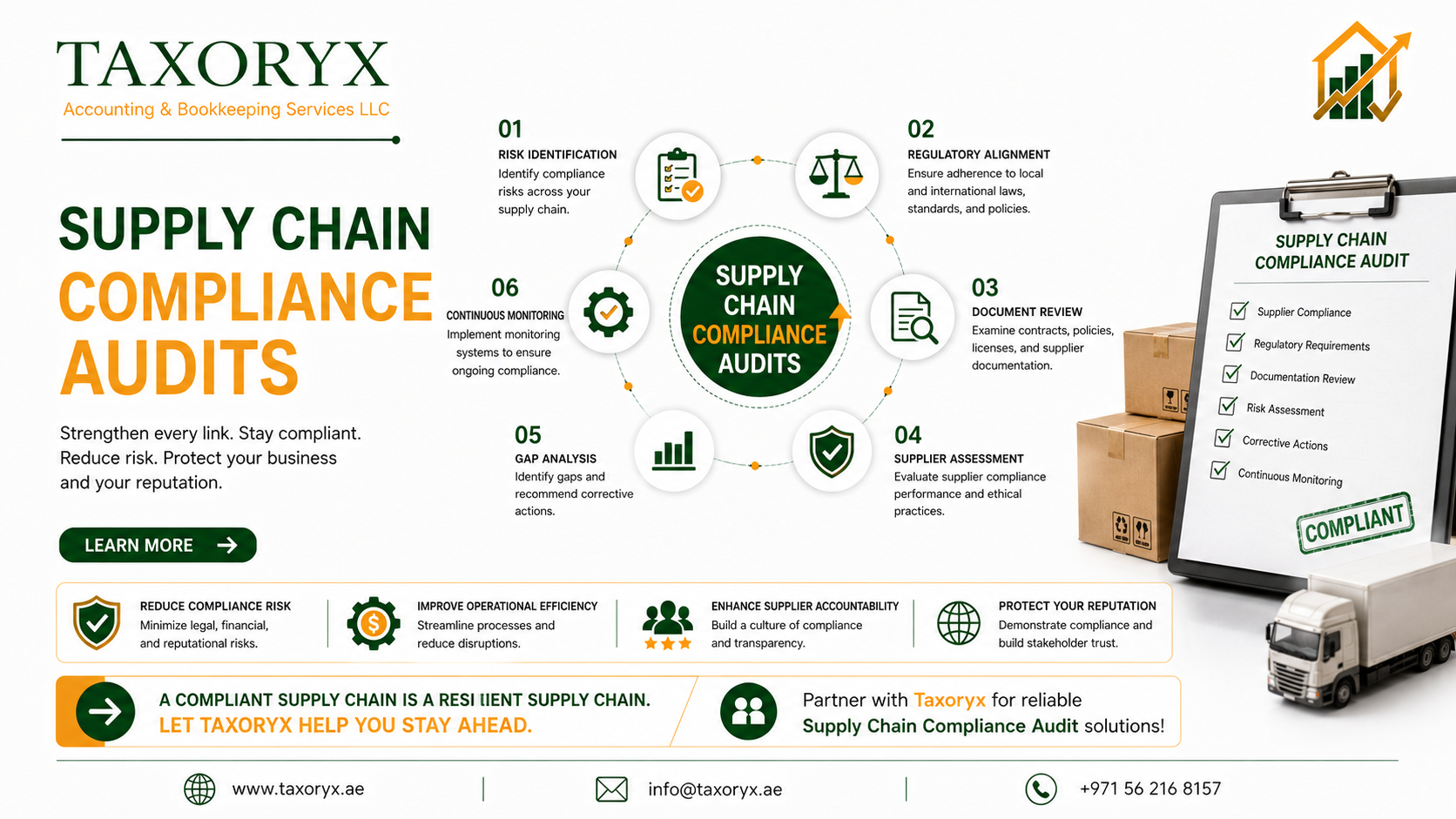
This is where a supply chain audit becomes extremely valuable. It helps create transparency across processes, systems, and operations, allowing businesses to identify inefficiencies, control risks, and improve overall supply chain performance.
The Need for a Supply Chain Audit in the UAE
With world-class ports, free zones, and major logistics hubs connecting Asia, Europe, and Africa, the UAE stands at the heart of global trade. However, as supply chains expand across multiple countries and partners, businesses face growing risks such as tax inaccuracies, vendor non-compliance, incomplete documentation, and excessive reliance on a single supplier.
This is why conducting a supply chain audit is essential for businesses operating in the UAE. A well-structured audit helps uncover hidden inefficiencies and compliance gaps before they develop into serious operational or financial issues.
When guiding clients through a supply chain audit, I focus on identifying small inconsistencies that could evolve into larger risks. Businesses should watch for key warning signs such as:
Fragmented Documentation: When suppliers provide multiple versions of the same invoice or inconsistent records, it often signals weak internal controls and poor financial management.
Unverified Workforce Records: If a supplier’s reported employee count does not align with their production output, it may indicate potential labor compliance issues that could damage your company’s reputation and lead to legal consequences.
Identifying these early warning signs through regular audits helps organizations maintain compliance, improve transparency, and build a more resilient supply chain.
Key Areas to Focus on to Identify Supply Chain Risks Early
To prevent operational and financial risks from escalating, businesses should carefully evaluate critical areas of their supply chain. A comprehensive supply chain audit helps identify weaknesses and ensures smoother, more compliant operations. Important areas to focus on include:
Supplier Risk Profile:
Evaluate your suppliers’ financial stability, operational capabilities, and governance practices. If a vendor’s certifications or compliance documents do not match their actual operations, it may signal potential risks that require deeper investigation.
Quality Control and Traceability:
Review how product records are maintained and how traceability systems are implemented. Strong traceability processes allow businesses to quickly identify the source of quality issues and take corrective action before they affect customers.
Logistics and Customs Efficiency:
Analyze freight routes, carrier reliability, and the efficiency of customs clearance processes. Identifying bottlenecks in transportation or customs procedures can help reduce delays, control logistics costs, and prevent disruptions in production.
Data Integrity and IT Controls:
Assess how data flows across systems within the organization. Inconsistent or inaccurate data across platforms can lead to poor decision-making and increase operational risks.
Regulatory Compliance and Alignment:
Ensure that invoices reflect accurate tax treatments, customs declarations are properly prepared, and cross-border transactions comply with applicable regulations. Maintaining regulatory compliance is essential to avoid penalties and operational disruptions.
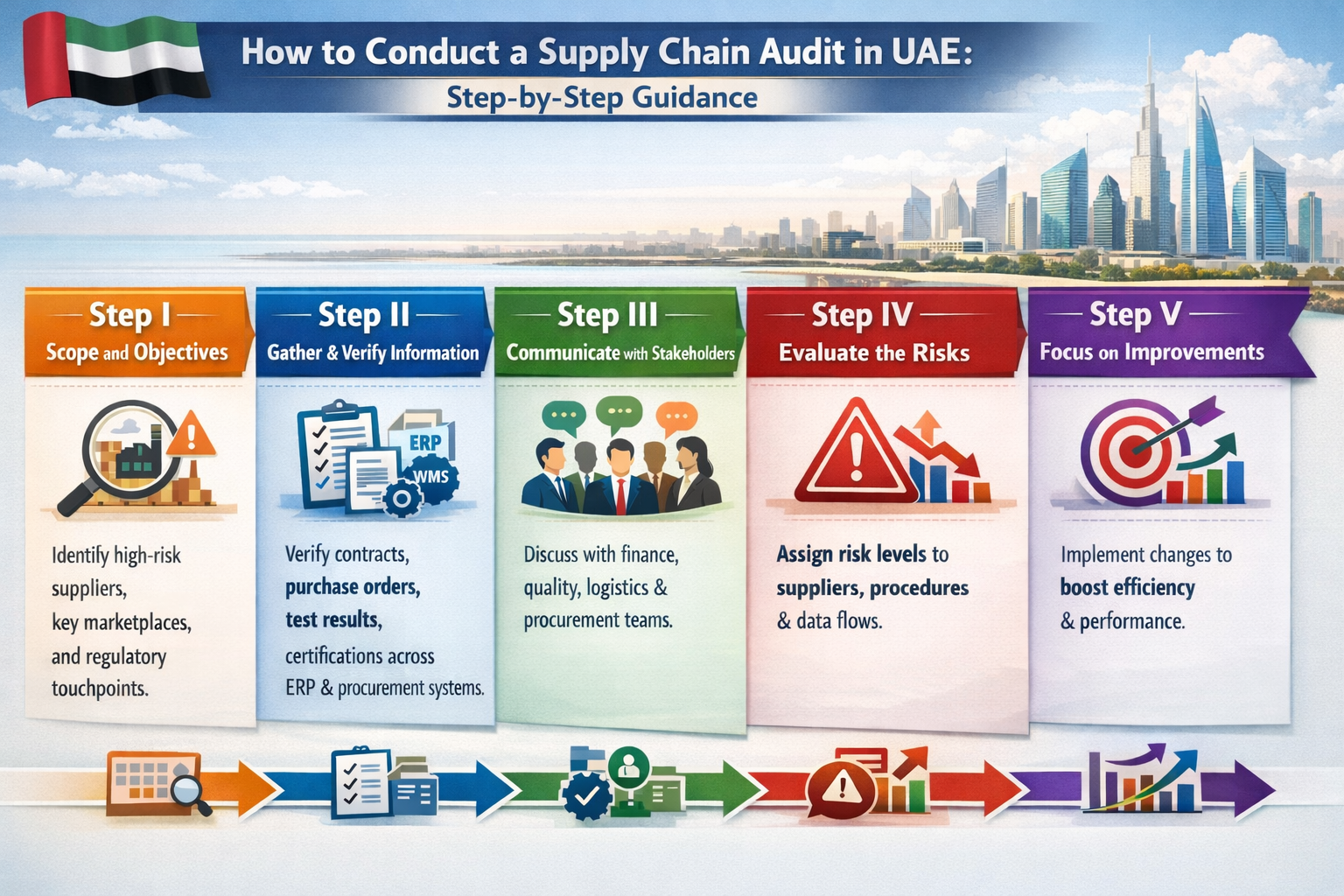
How to Conduct a Supply Chain Audit in UAE: Step-by-Step Guidance

Step 1 – Define Scope and Objectives
The first step is to clearly define the purpose and scope of the audit. This involves identifying high-risk suppliers, key markets, and important regulatory touchpoints that could impact your supply chain operations.
Step 2 – Collect and Verify Information
Gather and review critical documents such as contracts, purchase orders, test reports, and supplier certifications. It is also important to verify that data remains consistent across systems like ERP, WMS, and procurement platforms to ensure accuracy and transparency.
Step 3 – Engage with Key Stakeholders
Collaborate with internal teams including finance, quality assurance, logistics, and procurement. These discussions help identify existing control mechanisms and highlight areas where information gaps or process failures may occur.
Step 4 – Assess and Prioritize Risks
Evaluate potential risks across suppliers, operational processes, and data flows. Assign risk levels based on their potential impact and likelihood, paying special attention to areas where minor errors could lead to significant financial or operational consequences.
Step 5 – Implement Improvements
Focus on corrective actions and process improvements that align with your business operations. Prioritize initiatives that deliver the greatest operational efficiency, risk reduction, and long-term value for your supply chain.
My Opinion
As a tax and compliance professional in the UAE, I have seen how the business environment in the Emirates has evolved. Today, companies can no longer rely on minimal oversight to succeed. With the UAE operating on a global trade platform, businesses must proactively identify risks and maintain strong compliance standards.
Building a resilient and transparent supply chain is essential to earning the trust of investors, regulators, and international partners. By identifying potential risks early through regular audits and strong internal controls, businesses can protect their operations, safeguard their customers, and secure long-term growth and sustainability.
How Can Taxoryx Assist?
Taxoryx’s tax team is highly knowledgeable about the prevailing tax laws and the UAE tax regime, particularly the recently introduced Corporate Tax (CT). Businesses preparing to file corporate tax returns, calculate CT liabilities, and ensure compliance with the regulations can rely on the support of our experts, who are always ready to assist.
Companies can connect with our specialists to receive personalized, tailored tax solutions designed to minimize non-compliance risks and ensure accurate and timely tax filing.
To learn more about our tax services, get in touch with the Taxoryx team today!