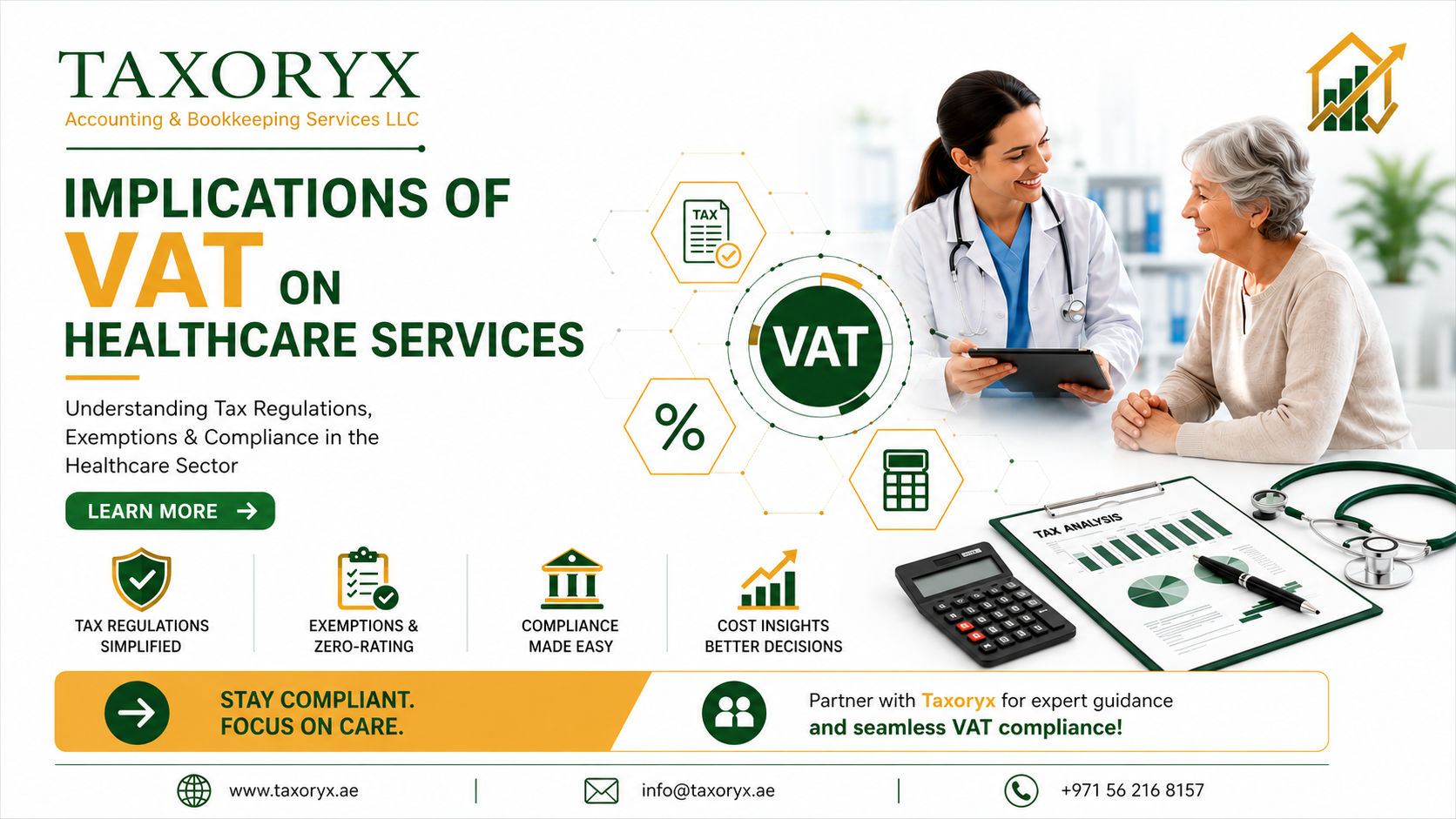
VAT Implications on Healthcare Services in the UAE
Over the years, I’ve worked with businesses across many industries to help them understand their tax responsibilities. But when speaking with hospital owners, clinic managers, medical centers, and healthcare startups in the UAE, the same question often comes up first:
“Healthcare is an essential service—so how does VAT even apply to it?”
It’s a very reasonable question. VAT was introduced in the UAE in 2018 as part of the government’s strategy to diversify revenue sources and build a stronger economy beyond oil dependency. However, healthcare is not like a regular commercial business it directly affects people’s wellbeing.
Because of that, the UAE created a balanced VAT framework where some healthcare services are taxed at 0%, some are exempt, and others fall under the standard 5% VAT rate. Understanding these categories is critical for every healthcare provider.
Why VAT in Healthcare Is Structured Differently
The UAE healthcare sector continues to grow rapidly, with thousands of hospitals, clinics, diagnostic centers, pharmacies, and medical service providers operating across the country.
As the industry expands, taxation requires a practical approach one that supports public healthcare access while maintaining regulatory compliance and economic sustainability.
That is why VAT on healthcare services is divided into three main categories:
Zero-Rated Services
Exempt Services
Standard-Rated Services (5%)
Each category affects both tax liability and the ability to recover input VAT.
Zero-Rated Healthcare Services (0% VAT)
Most essential and core healthcare services in the UAE fall under zero-rated VAT. This means the healthcare provider charges VAT at 0%, but still retains the right to recover input VAT paid on related business expenses. This creates a major financial advantage for hospitals and clinics because they can reclaim VAT paid on costs such as equipment, rent, supplies, and operational expenses. Examples of zero-rated healthcare services include:
Surgical procedures
Diagnostic services
Preventive care
Medical consultations
Dental treatments
Approved medical treatments by health authorities
Prescription medicines supplied for treatment
Medical equipment and devices directly used for patient care
For healthcare providers, zero-rating helps maintain affordability for patients while protecting business cash flow.
Exempt Healthcare Services
Some healthcare services are treated as VAT exempt. At first glance, this may seem similar to zero-rating because no VAT is charged to the patient but the financial impact is very different. When a service is exempt:
No VAT is charged to the patient
The healthcare provider cannot recover input VAT paid on related expenses
This means VAT paid on rent, utilities, administrative costs, and supplies becomes an additional operational cost. Examples may include:
Primary or essential medical care
Certain preventive healthcare services
Inpatient treatment services
This distinction is extremely important because it directly affects profitability and pricing strategies.
Standard-Rated Healthcare Services (5% VAT)
Not every service provided by a hospital or clinic qualifies as medical treatment. If a service is considered elective, aesthetic, or non-essential from a medical perspective, it generally falls under the standard VAT rate of 5%. Examples include:
Cosmetic surgeries
Botox for aesthetic purposes
Laser hair removal
Elective beauty treatments
Wellness services
Non-medical product sales
Premium hospital room upgrades beyond standard care
This creates a complex VAT environment for clinics offering both medical and cosmetic services. For example: If a clinic performs reconstructive surgery (which may qualify differently) and also provides cosmetic enhancement procedures (which are taxable), the accounting system must clearly separate those revenue streams. Proper classification becomes essential.
Why VAT Compliance Is So Important in Healthcare
VAT affects healthcare businesses far beyond billing patients. It influences procurement, financial planning, compliance risk, and overall operational efficiency.
Procurement Decisions
VAT applies to many medical purchases such as:
Hospital beds
Surgical instruments
Diagnostic machines
Medical devices
Healthcare software systems
Healthcare providers must structure procurement carefully to manage VAT efficiently while maintaining patient care standards.
Financial Planning and Cash Flow
VAT impacts service pricing, invoice management, and working capital. To avoid complications in input VAT recovery, providers must issue VAT-compliant invoices and ensure VAT returns are filed accurately and on time. Poor VAT planning can quickly affect profitability.
Compliance Risk
Hospitals and clinics process hundreds of transactions every month. Incorrect VAT treatment whether on services, medicines, or equipment can result in penalties, interest, and compliance issues with the Federal Tax Authority (FTA). Strong documentation and proper contract structuring are essential.
Accurate Classification of Services and Products
VAT is not applied equally across all healthcare services, medicines, and medical equipment. Misclassification is one of the most common issues in the healthcare sector. Healthcare providers must clearly understand which items are:
Zero-rated
Exempt
Standard-rated
Even small classification errors can lead to significant tax exposure.
Staying Updated with VAT Regulations
VAT regulations evolve over time, and healthcare providers must stay updated with changes in FTA guidelines and compliance requirements Keeping track of policy updates helps businesses avoid risk and maintain full compliance. Regular review is far better than dealing with penalties later.
Looking Ahead
The UAE continues aligning its tax system with international best practices, focusing heavily on digital compliance, transparency, and stronger reporting standards. Future VAT developments are likely to emphasize better documentation, automation, and accountability rather than simply increasing tax rates.
My professional advice is simple: Maintain strong records, review service classifications regularly, and stay updated with tax law changes. In healthcare, compliance is not just a tax matter it directly impacts operational stability.
Taxoryx: Your Trusted VAT Compliance Partner
In today’s regulatory environment, VAT compliance is not optional it is a business necessity. The healthcare sector is one of the most technically complex industries when it comes to VAT application. Hospitals, clinics, pharmacies, and healthcare startups often face challenges in correctly applying VAT and managing compliance obligations. At Taxoryx, we help healthcare providers across the UAE simplify VAT compliance with practical, industry-focused tax solutions.
Our expert tax team assists with:
VAT registration and compliance reviews
Structuring healthcare services correctly under VAT
Accurate VAT charging and invoice management
VAT return preparation and timely filing
Input VAT recovery planning
Documentation and FTA compliance support
VAT treatment for mixed healthcare services
We ensure that your healthcare business remains compliant, financially efficient, and fully prepared for tax audits and regulatory reviews. With Taxoryx, you gain clarity, confidence, and expert support for every VAT decision. Connect with our specialists today and strengthen your healthcare VAT compliance with confidence.